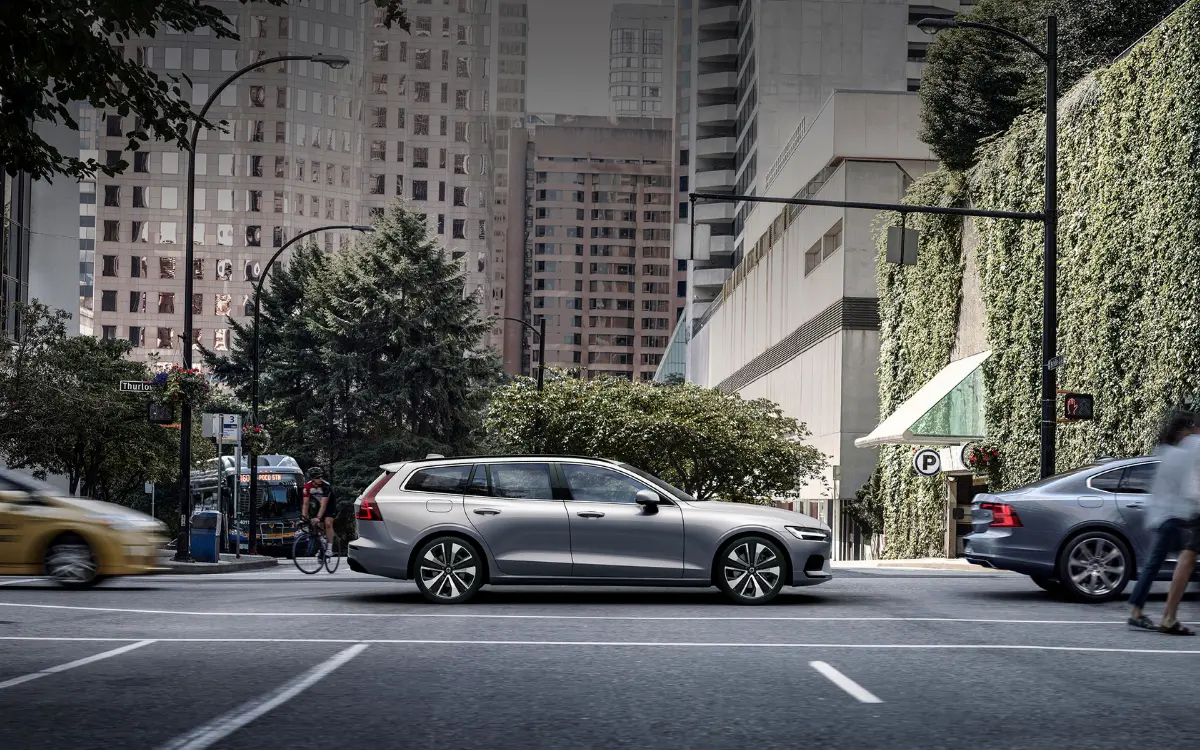
Many drivers today are interested in a car with an electric or at least partially electric powertrain. Volvo hybrid models, in particular, combine traditional engine technology with modern electric mobility.
Two variants currently dominate the lineup: mild hybrids and plug-in hybrids. Both technologies reduce fuel consumption and improve energy efficiency. At the same time, however, they differ significantly in terms of range, charging behavior, and application possibilities.
This article explains in simple terms how a Volvo hybrid works, highlights the difference between plug-in hybrids and mild hybrids, and helps you decide which concept better suits your daily life.
Key Points at a Glance
- Volvo hybrid models combine an internal combustion engine with an electric motor
- Mild hybrids provide electric assistance to the engine but do not run on electric power alone
- Plug-in hybrids enable electric driving for several kilometers
- Plug-in hybrids can be charged at a wallbox or charging station
- The right solution depends on your personal driving profile
What exactly does “Volvo Hybrid” mean?
A Volvo Hybrid essentially combines two powertrain systems: a traditional internal combustion engine and an electric motor. The purpose of this combination is clear. The electric motor assists the internal combustion engine in situations that require high power output, such as acceleration or city driving.
As a result, the vehicle consumes less fuel while simultaneously reducing CO₂ emissions. This technology really comes into its own in stop-and-go traffic.
Volvo relies on two different concepts for its hybrid vehicles:
- Mild-hybrid systems optimize the internal combustion engine.
- Plug-in hybrids expand on this concept with a larger battery and true electric driving capabilities.
Mild Hybrid: Efficiency Without Charging
A mild hybrid uses a small battery and an electric motor to assist the internal combustion engine. The vehicle recovers energy during braking or coasting. The system stores this energy in the battery. When accelerating, the electric motor provides additional power. However, the vehicle does not run entirely on electric power. The internal combustion engine remains active at all times.
Advantages of a mild hybrid system
- lower fuel consumption
- smoother acceleration
- no charging required
- familiar driving feel
Many current Volvo models use this technology. It improves efficiency and comfort without significantly altering everyday driving or the driving experience.
Plug-in Hybrid: Electric Driving for Everyday Use
A plug-in hybrid has a significantly larger battery than a mild hybrid. This battery also allows for all-electric driving over several kilometers. Many everyday trips can thus be completed entirely on electric power. The battery charges at a standard outlet, wallbox, or public charging station.
Advantages of a plug-in hybrid
- electric driving in everyday life
- lower emissions in city traffic
- long total range
- powerful combined powertrain
Which hybrid solution suits your driving profile?
The choice between a mild hybrid and a plug-in hybrid depends heavily on your personal daily driving habits.
A mild hybrid is particularly suitable for drivers who mainly drive longer distances and do not want to charge the vehicle.
A plug-in hybrid, on the other hand, is ideal for many short daily trips. If you can charge at home or at work, you’ll be able to drive a large portion of your trips in fully electric mode.
Mild Hybrid vs. Plug-in Hybrid
| Feature | Mild Hybrid | Plug-in Hybrid |
| Electric driving | ❌ | ✅ |
| Charging required | ❌ | ✅ |
| Electric range | – | 70–90 km |
| Fuel consumption | Slightly reduced | Significantly reduced |
If you’re unsure, it’s best to get personalized advice. The team at Hüsser & Palkoska will be happy to help you find the Volvo hybrid that best suits your driving style.
Volvo Hybrid Models at a Glance
Volvo is firmly committed to electrified powertrains—which is why virtually all current models are available today as both mild hybrids and plug-in hybrids (Recharge). Depending on your driving profile, you can therefore choose the right powertrain variant within the same model.
Mild Hybrid Models
- Volvo XC40 Mild Hybrid
- Volvo XC60 Mild Hybrid
- Volvo XC90 Mild Hybrid
- Volvo V60 Mild Hybrid
- Volvo V90 Mild Hybrid
Plug-in Hybrid Models
- Volvo XC60 Plug-in Hybrid
- Volvo XC90 Plug-in Hybrid
- Volvo V60 Plug-in Hybrid
- Volvo V90 Plug-in Hybrid
The Volvo XC60 is particularly popular in Switzerland and is available as both a mild hybrid and a plug-in hybrid. This offers maximum flexibility, from efficient long-distance driving to locally emission-free commuting in everyday life.
Volvo Hybrid Combines Efficiency and Flexibility
A Volvo Hybrid offers an ideal introduction to electrified mobility. Mild-hybrid systems improve efficiency and comfort without the need for charging. Plug-in hybrids also enable electric driving in everyday use.
By choosing the right model, you’ll benefit from lower fuel consumption, modern technology, and the safety you’ve come to expect from Volvo. With expert advice from Hüsser & Palkoska, interested buyers can quickly determine which hybrid solution best fits their driving profile.
FAQs about Volvo Hybrid
How far can a Volvo plug-in hybrid drive on electric power?
The electric range depends on the model, but for current Volvo plug-in hybrids, it is typically around 70 to 90 kilometers in pure electric mode.
Does a mild hybrid need to be charged?
No. The system automatically charges the battery during braking or coasting.
Are hybrid vehicles more fuel-efficient?
Yes. The combination of an electric motor and an internal combustion engine reduces fuel consumption, especially in city traffic.
Who is a plug-in hybrid particularly suitable for?
Drivers with short daily commutes benefit the most if they can charge regularly.