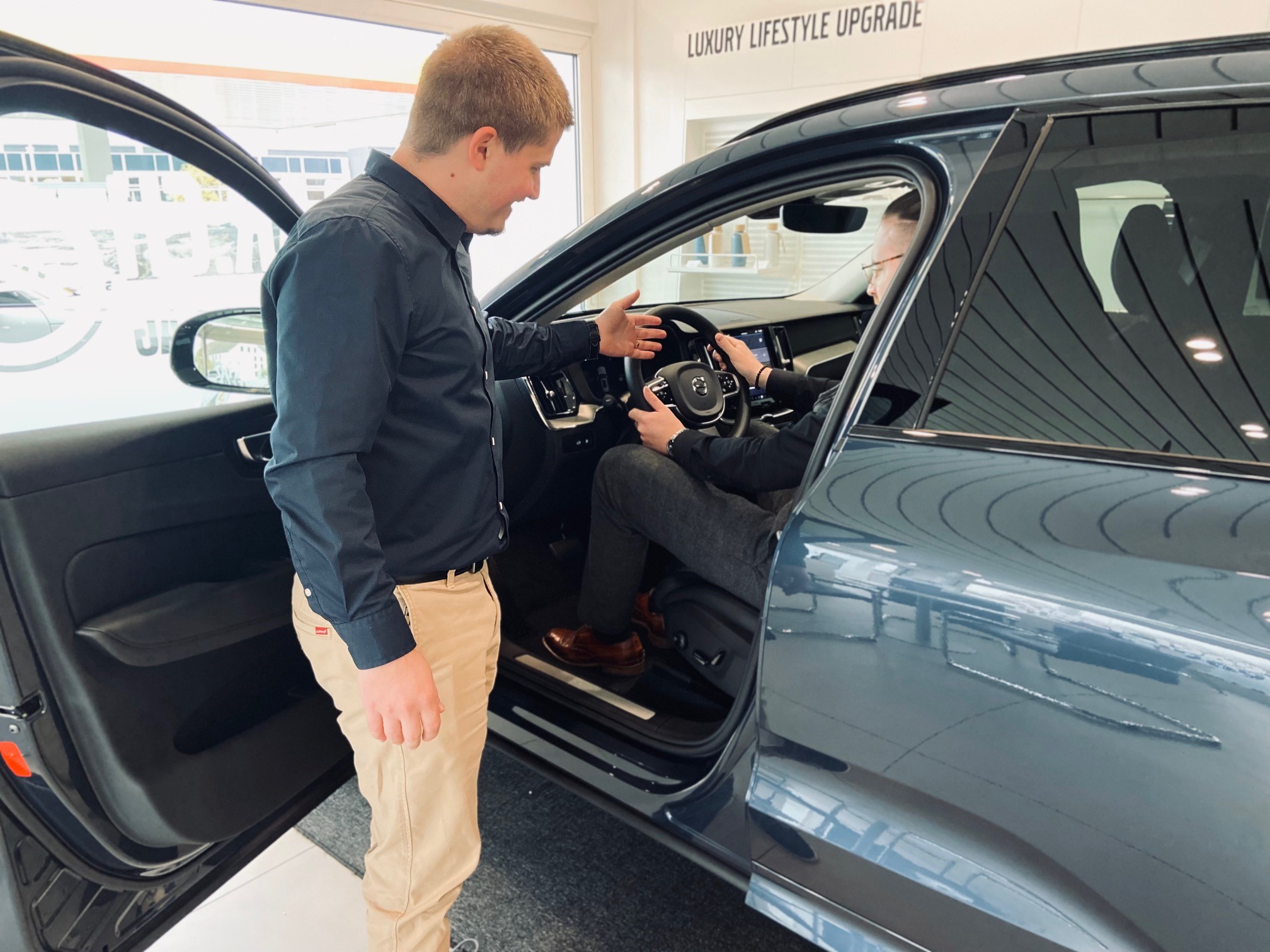
Fleet customers rarely just buy a vehicle – they are looking for a solution that fits their business. That is why we start by talking about your situation, and only then about models: How large is your fleet, what are your vehicles used for, how do you finance them today and what rules apply to your company cars? This applies to companies with just a few company cars as much as to larger fleets in Baar, Zug and throughout Central Switzerland.
Request fleet consultation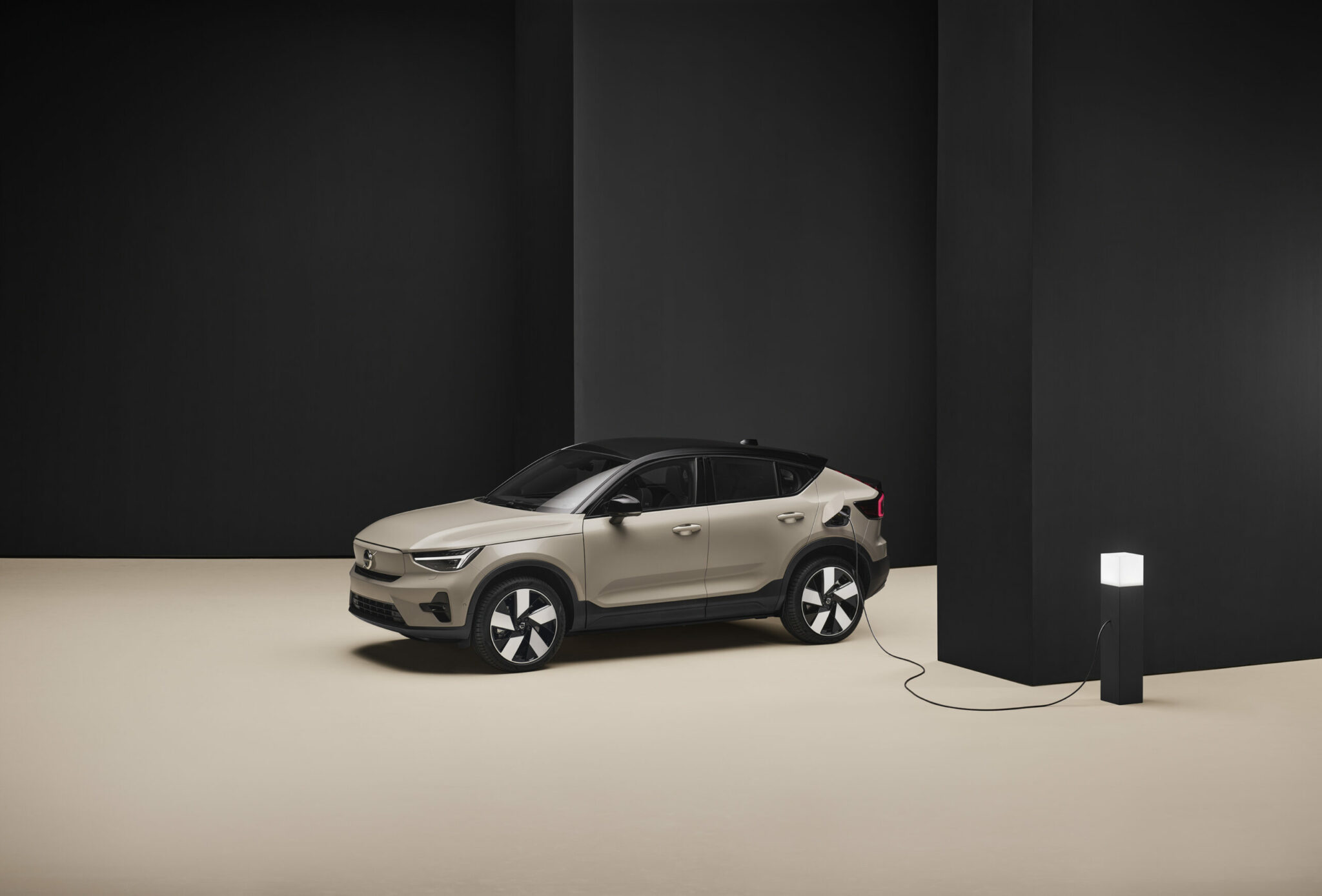

Many companies know individual cost items, but not the total cost of ownership (TCO) of their fleet. 60% of companies manage their fleet by purchase price rather than by total cost.¹ Together with you, we calculate what a vehicle actually costs per month and per kilometre – including financing or depreciation, energy, servicing, tyres and insurance. By the way: many companies reimburse business kilometres at around CHF 0.70 per kilometre. Above a certain annual mileage, a company car is often considerably more economical.
Book a TCO check86% of companies already have electric vehicles in their fleet, and 60% want to increase their share over the next 12 to 18 months.¹ The key question is which vehicles can sensibly be electrified. To answer it, we look at your driving profiles, your charging options at home, at work and on the road, and realistic running costs. An example: at 30,000 km per year and a four-year holding period, a Volvo EX60 costs around CHF 0.51 per kilometre, while a comparable mid-size SUV with petrol or mild-hybrid drive costs around CHF 0.58 – even though the EX60 is around CHF 6,000 more expensive to buy.²
Request fleet consultationWhere is your savings potential? Together we examine which vehicles, drive types, contract terms and financing solutions suit your company – whether purchase, leasing or full-service leasing. Fleets that have grown over time, with different brands, financing models and service providers, in particular often offer potential for more transparency and lower costs.
Questions we clarify with you:

Advice on and procurement of the right vehicles.
Maintenance and servicing from a single source.
Tyre service for your entire fleet.
Body and paint repairs.
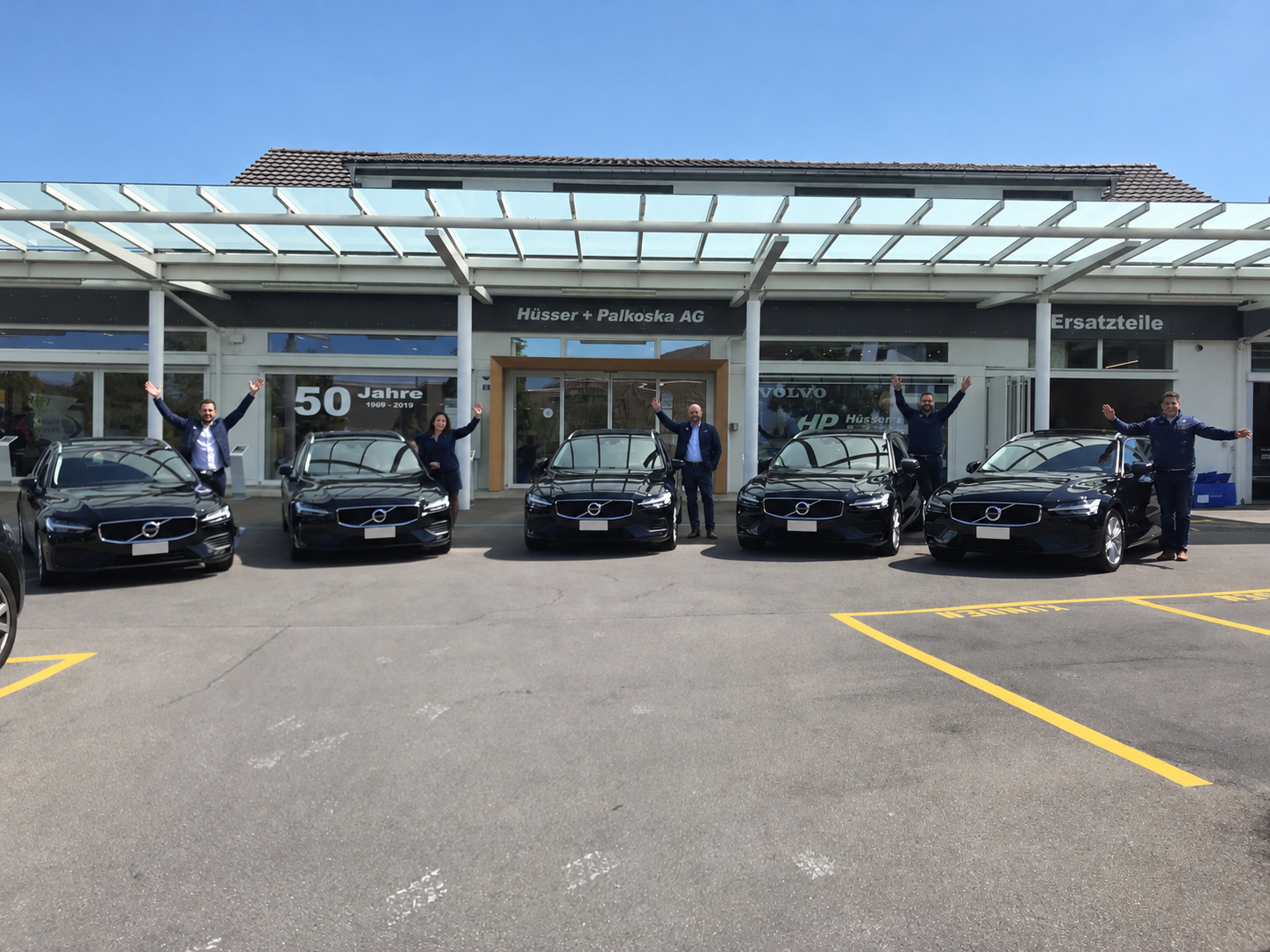
For companies with just a few company cars as well as for larger fleets – in Baar, Zug and throughout Central Switzerland.
Financing or depreciation, energy, servicing, tyres and insurance. Together, these give the actual cost per month and per kilometre.
Many companies reimburse business trips at around CHF 0.70 per kilometre. With higher annual mileage, a company car is often cheaper. In the example with a Volvo EX60 (CHF 0.51 per kilometre), the difference at 30,000 km is around CHF 5,700 per year.²
At 30,000 km per year and 220 working days, a vehicle covers an average of around 136 km per day. What matters is therefore the driving profile, not the maximum range.
Considerably: at home, electricity costs around 27 cents per kWh; at a fast charger, around 100 cents. Over four years, this adds up to CHF 8,000 to 10,800 per vehicle.¹ That is why we clarify the charging situation before you choose a vehicle.
Only if a charging point is available and the vehicle is charged regularly. Otherwise, the hybrid runs as a heavy petrol car. In one real-life case, only 3 out of 55 plug-in hybrids were charged regularly.³
That depends on your fleet and your goals. 41% of companies finance by purchase, 44% by full-service leasing.¹ We show you which solution performs better for you in terms of total cost.
Often, yes: 41% of companies have not yet adapted their car policy to electric mobility, and only 14% allow a higher budget for electric vehicles.¹ If only the purchase price counts, an electric car is ruled out before its costs have been calculated. We provide you with a total cost of ownership (TCO) calculation that you can use to make your case internally.
These are the two most important goals of fleet managers for 2026: cutting costs (53%) and electrifying the fleet (52%).¹ A total cost calculation brings both together. An example: if a company replaces 50 of 100 combustion-engine vehicles with a Volvo EX60, fleet costs fall by around 6% – more than CHF 109,000 per year.²
In the same example, the fleet’s CO₂ emissions fall from 572 to 286 tonnes per year.²
You are not alone: 69% of companies work without fleet software.¹ Especially in fleets that have grown over time, with different brands, financing models and service providers, there is often no clear overview of total costs. We help you make your current cost base visible.
For 61% of companies, 48 months is the standard term for full-service leasing; only 16% still use 36 months. The most common basis is 30,000 km per year.¹
Sources
¹ Car Policy 2025 market study, Fleet Consulting GmbH (154 companies).
² Sample calculation, Fleet TCO Simulator 2026+, Fleet Consulting GmbH, 09/2026: 30,000 km/year, 4-year holding period, electricity price (charging mix) CHF 0.37/kWh, excluding charging infrastructure. Volvo EX60 P6 vehicle data: manufacturer’s specifications.
³ Consulting case, Fleet Consulting GmbH, anonymised (service company, 120 vehicles).